Leaks & burst pipes
Burst Pipe Repair Cost: What You Should Expect to Pay
Published
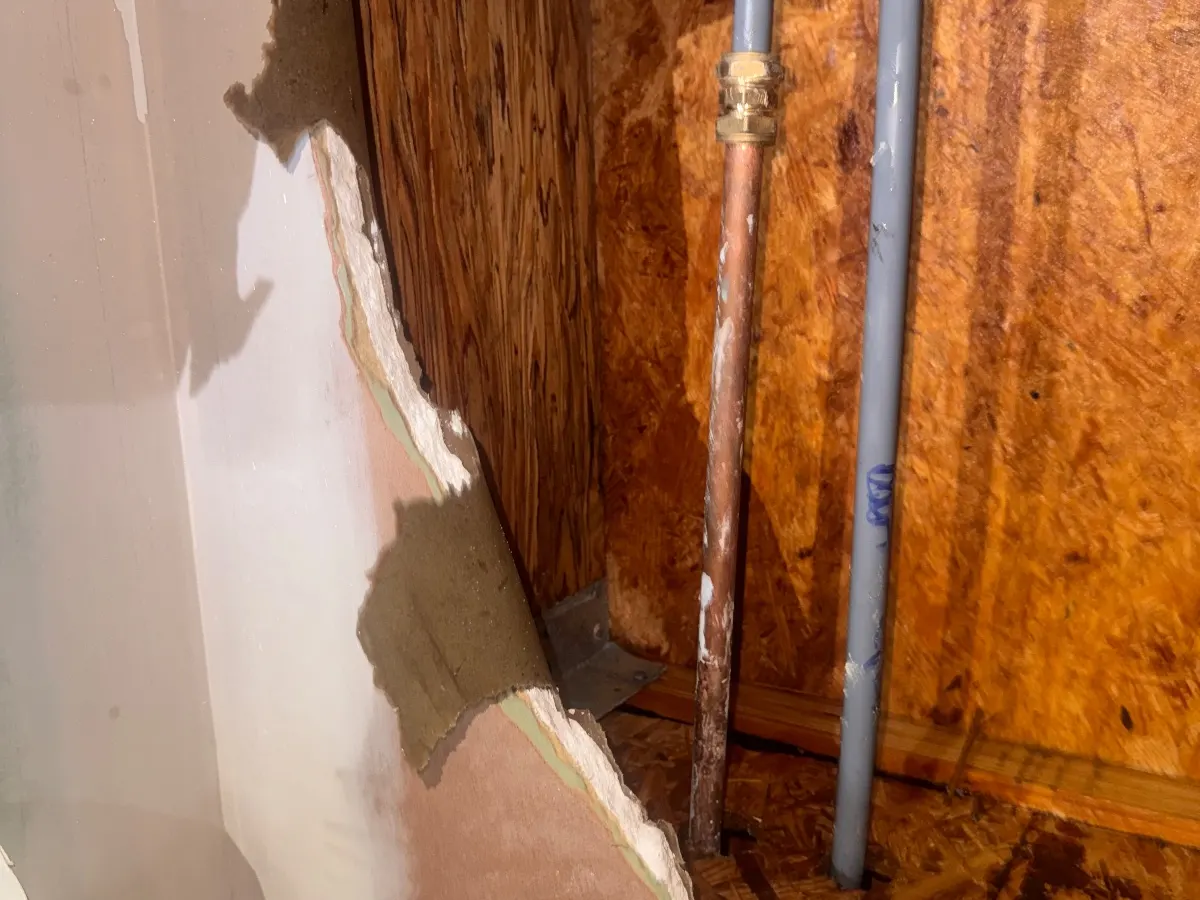
Repairing a burst pipe that you can see and reach is usually a short job, and published UK price guides put most of them at roughly £150 to £450. The bill climbs when the pipe is under a floor, inside a wall or underground, because finding it, reaching it and making good take far longer than the joint.
Why the split costs little and the access costs a lot
The parts for a typical burst pipe repair are cheap. A length of 15mm copper or plastic pipe, two compression or push-fit fittings and perhaps a slip coupling rarely come to more than a few tens of pounds. The cutting and jointing, on a pipe the engineer can see, is often under an hour.
What changes the price is everything around that hour. How long it takes to find the leak, how much has to be lifted, cut or dug to reach it, whether the pipe is copper, older plastic or lead, and what happens to the flooring, plaster or tiles afterwards. Two bursts with the same split can differ by several hundred pounds purely because one is under the kitchen sink and the other is under a tiled bathroom floor.
So the most useful thing you can tell a plumber when you call is not how big the split is, but where the pipe is and what is covering it.
Typical market ranges by where the pipe is
These are typical UK market ranges from published price guides, parts and labour together, before any redecoration. London prices sit towards the upper end. They are a guide to what is reasonable, not our prices.
- Exposed pipe you can reach, such as under a sink, in an airing cupboard or in the loft: about £150 to £450
- Pipe behind boxing or a bath panel that can be unscrewed: similar, plus the time to open and close the boxing
- Pipe under a suspended timber floor: more than an exposed pipe, depending on how many boards have to come up and whether the joists are notched
- Pipe in a solid floor or behind tiles, including heating pipes in a screed: commonly £400 to £1,200 once tracing and cutting in are added
- Leak tracing on its own, where the leak cannot be seen: often £200 to £600
- Underground supply pipe between the boundary and the house: repair or replacement usually involves digging and can run into four figures
Making good is almost always extra. Replastering, retiling or relaying flooring is normally a separate trade and a separate bill, and is often part of an insurance claim rather than the plumbing invoice.
What you actually pay for on an emergency visit
Most emergency plumbers charge for getting someone to you, then for the work itself. Some roll the first hour into the call-out; some charge by the hour from arrival; some quote a fixed price per job. None is automatically cheaper, so ask what the first figure covers before you agree.
Here, the £60 call-out gets an engineer to you at any hour, day or night, and the repair price is agreed with you on site before any work starts. If the engineer finds the pipe needs more than a short repair, for example a whole run replaced, you hear the figure first and decide. What the call-out covers is set out with our emergency plumber prices, and the visit itself is described on our burst pipe emergency repair page.
If you are comparing quotes by phone, ask each plumber the same three questions: is there a charge for coming out, is the repair priced by the hour or by the job, and is the price agreed before the work or after it.
Things that push the price up
Some bursts are straightforward but cost more because of what the engineer finds when the floor or boxing comes off.
- Old lead pipe: it cannot be joined like copper, so a burst on lead usually means replacing that section with copper or plastic using a special adaptor
- Several splits along one run, common after a hard frost in an unlagged loft or under a suspended floor
- A seized or missing stopcock, which has to be dealt with before the burst can be isolated
- A heating pipe, which adds draining, refilling, bleeding and repressurising the system
- Pipework that was installed badly in the first place, such as push-fit without pipe inserts, which the engineer may advise replacing
- Access that needs a second trade, such as a kitchen unit or a fitted bath that has to come out
Can you repair a burst pipe yourself to save money?
On an exposed straight run of copper or plastic, a competent DIYer with the water off can cut out a split and fit a push-fit or slip coupling. The parts cost little. The risk is in the joint. A compression fitting that is over- or under-tightened, or a push-fit on pipe without an insert or not cut square, may hold for days and then let go while you are out.
A pipe repair clamp or self-amalgamating tape is a sensible way to get the water back on tonight, and our guide to temporary fixes that hold explains how. Treat it as a stopgap. If the pipe is hidden, lead, or on the heating system, the saving rarely justifies the risk of a second flood.
Work on your side of the supply must meet the Water Supply (Water Fittings) Regulations 1999. A like-for-like repair of a burst meets that easily. Some work has to be notified to the water company before it starts, including laying a new supply pipe outside the building shallower than 750mm or deeper than 1,350mm.
Who pays: you, the insurer, the landlord or the water company?
Most home insurance treats a sudden burst as escape of water. The damage the water caused is usually covered; the cost of repairing the pipe often is not, unless the policy includes trace and access cover, which pays for finding the leak and opening up floors or walls to reach it. Some policies also set a higher excess for escape of water than for other claims. Check the wording before you pay for more than the emergency repair, and see what water damage insurance covers.
If you rent, the landlord is normally responsible for repairing the pipework, under section 11 of the Landlord and Tenant Act 1985 for most tenancies of under seven years, and should be told straight away. If the burst is on the water company’s side of your property boundary, often marked by the outside stop tap, it is theirs to fix at no cost to you. Who pays when Thames Water pipes burst explains how to tell which side it is on. A metered customer who has had a leak on their own pipe repaired can ask Thames Water about its leak allowance, which covers the cost of the lost water, not the repair. Thames Water asks for the leak to be fixed within four weeks of it being identified and the claim made within three months of the repair, with the plumber’s invoice as proof.
Questions people ask
How much does it cost to repair a burst pipe?
For a pipe that can be reached easily, published UK guides put most repairs at about £150 to £450. Hidden pipes under floors, behind tiles or underground cost more because of the time spent finding and reaching them.
Does home insurance pay for the plumber to fix a burst pipe?
Usually not for the pipe itself. Policies generally cover the resulting water damage as escape of water. Trace and access cover, if you have it, can pay for finding the leak and opening up to reach it.
Why is a burst pipe under the floor so much more expensive?
The repair joint is the same, but boards or tiles have to come up, the leak may need tracing first, and the floor has to be put back afterwards. Access and making good take far longer than the plumbing.
Is it cheaper to wait until the morning for a burst pipe repair?
It can be if you can isolate the burst and keep water to the rest of the house. If you cannot stop the water or it is reaching a ceiling or the electrics, waiting costs more in damage than it saves.