Leaks & burst pipes
Frozen Pipes: How to Thaw Them Without Bursting Them
Published
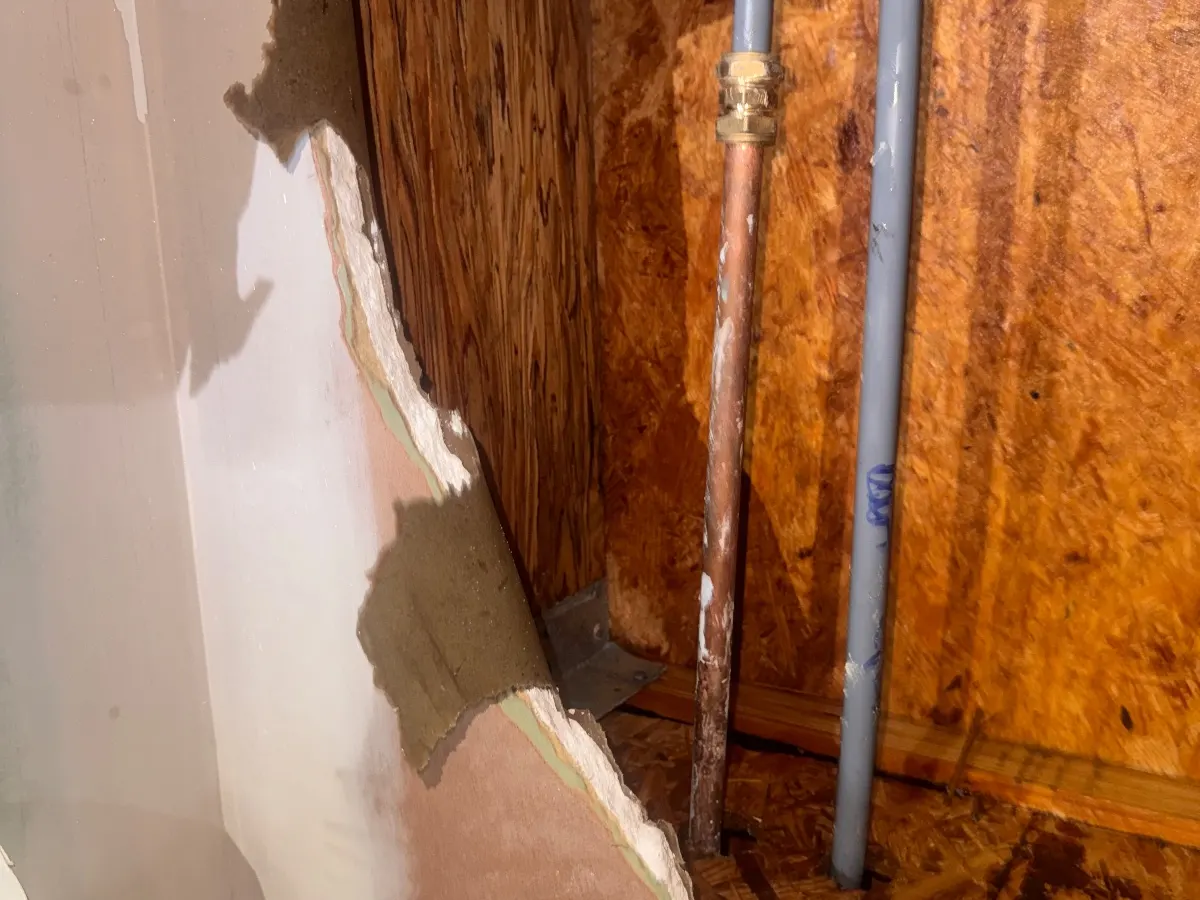
To thaw a frozen pipe, turn off the stopcock, open the tap the pipe feeds, then warm the pipe gently from the tap end back towards the frozen section with a hot water bottle, warm towels or a hairdryer on low. Never use a flame. Watch for leaks as it thaws, because the split often only shows then.
Is it frozen, or is something else wrong?
A frozen pipe usually shows up on the first very cold morning: a tap that gives nothing, or a trickle, while others in the house work normally. The pattern tells you where to look.
- One tap or one appliance with no water: the pipe feeding it is frozen, usually where it runs along an outside wall, through a garage, under a suspended floor or in the loft
- No cold water anywhere in the house, but neighbours are fine: the supply pipe is frozen where it comes into the property, often under the floor near the stopcock or in an outbuilding
- No water in your house or your neighbours’: this is almost certainly a problem on the water company’s network, not a frozen pipe of yours
- Boiler showing a fault and gurgling, heating off, with a white plastic pipe running outside: a frozen condensate pipe, covered further down
- A cold water tank in the loft with ice on it, or a ballcock that will not move: the tank or its feed pipe has frozen
Before you thaw anything: turn the water off
Water expands by roughly a tenth as it turns to ice. Once ice blocks the pipe, more freezing squeezes the water trapped between the plug and a closed tap, and the pipe often splits there, where there is little ice. You will not see a leak yet because the ice plug is still holding back the mains. The water only escapes as it thaws, and by then it can be pouring into a loft or under a floor.
So turn the main stopcock off first. If you are thawing a tank-fed pipe in the loft, close the valve on the tank outlet as well. Then open the tap that the frozen pipe supplies. This gives melting water somewhere to go, and when water starts to trickle from the tap you know the ice has cleared.
Have towels, a bucket and a torch ready near the pipe. If you do not know where your stopcock is, find it before you start: where to find your stopcock covers the usual hiding places.
If the frozen pipe runs near a light fitting, a junction box or a consumer unit, do not use any electrical heater near it. Use towels soaked in warm water and wrung out instead.
How to thaw the pipe, step by step
Start at the end nearest the tap and work back towards the frozen section. Thawing the tap end first opens an escape route, so water and any steam from over-eager heating can get out instead of being trapped behind the ice.
Gentle heat is the whole point. The aim is to take the pipe from below freezing to a few degrees above over half an hour or so, not in two minutes.
- Wrap the pipe in towels soaked in hot tap water and wrung out, and replace them as they cool
- Or hold a hot water bottle against the pipe, moving it along as the ice clears
- Or use a hairdryer on its lowest setting, kept moving and kept well away from any water
- Warm the room or void the pipe runs through: open the loft hatch, open kitchen cupboard doors, put a heater in the garage at a safe distance
- Keep checking the tap. When it runs freely, leave it running gently for a minute to clear the last slush
What never to use on a frozen pipe
Every winter some of the worst damage comes from the thawing, not the frost. Do not use a blowtorch, a heat gun, a gas burner or any naked flame. Copper conducts heat quickly and a torch can melt nearby soldered joints, scorch timber and loft insulation, or start a fire in a void you cannot see into. Plastic pipe softens and can fail at a fraction of that heat.
Do not pour boiling water over a pipe inside the house. The sudden temperature change stresses the pipe, and the water goes into floors and ceilings. Do not hit the pipe to break the ice. Do not leave a heater running unattended next to a pipe in a loft or cupboard.
Once it runs again: look for the split
Turn the stopcock back on slowly and then go and look at the pipe you thawed, along its whole length, and at the ceiling below it. Frost damage often shows as a hairline crack along the pipe, a joint that has been pushed apart, or a bulge. On plastic pipe, check push-fit joints: ice can push the pipe partly out of the fitting.
Check again an hour later and the next morning. A small split can seep slowly into insulation or a floor void before it shows anywhere you would notice. If you see water, shut the stopcock again straight away and follow what to do when a pipe bursts.
If a pipe has frozen once, it will freeze again in the next cold spell unless something changes. How to stop pipes freezing covers lagging, the loft tank and outside taps.
Frozen condensate pipe: the boiler that stops on the coldest night
A condensing boiler drains acidic water through a plastic pipe, usually 21.5mm or 32mm, to a drain outside. In a hard frost the water in the outside section freezes, the condensate backs up into the boiler, and the boiler locks out with a fault code and often a gurgling sound.
Find where the pipe leaves the house and follow it to the frozen part, which is usually the lowest point, a bend or the open end; if several pipes come out nearby, which outside pipe is which comes down to size and material. Pour warm water from a kettle that has cooled for a while, not boiling, slowly over the pipe from a watering can or jug. When the ice clears, reset the boiler once using its reset button as the manual describes. If the pipe is high up or on a first-floor flat wall, do not climb a ladder on icy ground. Leave it, and use electric heaters in the meantime.
If the condensate pipe keeps freezing or keeps dripping afterwards, see a condensate pipe that is leaking.
Nothing inside the boiler casing is a householder job. Gas work is carried out by Gas Safe registered engineers.
When to stop and call someone out
Call a plumber rather than carrying on if you cannot find the frozen section, the pipe is inside a wall or under a solid floor, the whole supply is frozen where it enters the house, the pipe has already split, or you have no water and vulnerable people at home in the cold. The same goes for a frozen pipe you cannot reach without lifting boards or going into a loft you cannot safely stand in.
An engineer will thaw the pipe with controlled heat, check the run for splits, replace any damaged length and lag it. For a pipe that has already burst, our burst pipe emergency repair visit covers it, and if the house has no water at all, see our no-water emergency call-out. The £60 call-out gets an engineer to you at any hour, and the repair price is agreed with you on site before any work starts.
Questions people ask
Will frozen pipes thaw on their own?
Usually, once the temperature rises, but slowly, and a split in the pipe will start leaking the moment it does. Turn the stopcock off and thaw it gently yourself so you are there when the water returns.
Should I turn the water off if my pipes are frozen?
Yes. Turn the stopcock off before thawing, then open the tap on the frozen pipe. If the pipe has split, the water cannot flood out as the ice melts, and the open tap relieves pressure.
Can I pour boiling water on a frozen pipe?
Not on pipes inside the house. The sudden heat stresses the pipe and the water soaks into floors. On an outside condensate pipe, warm water that has cooled from the kettle, not boiling, is the safe way.
How long does it take to thaw a frozen pipe?
With gentle heat, often between half an hour and a couple of hours, depending on how long the frozen section is and how cold the space is. Rushing it with a flame or heat gun is how pipes and houses get damaged.