Boiler & heating breakdowns
Baxi Boiler Pressure: Normal Range and How to Fix It
Published
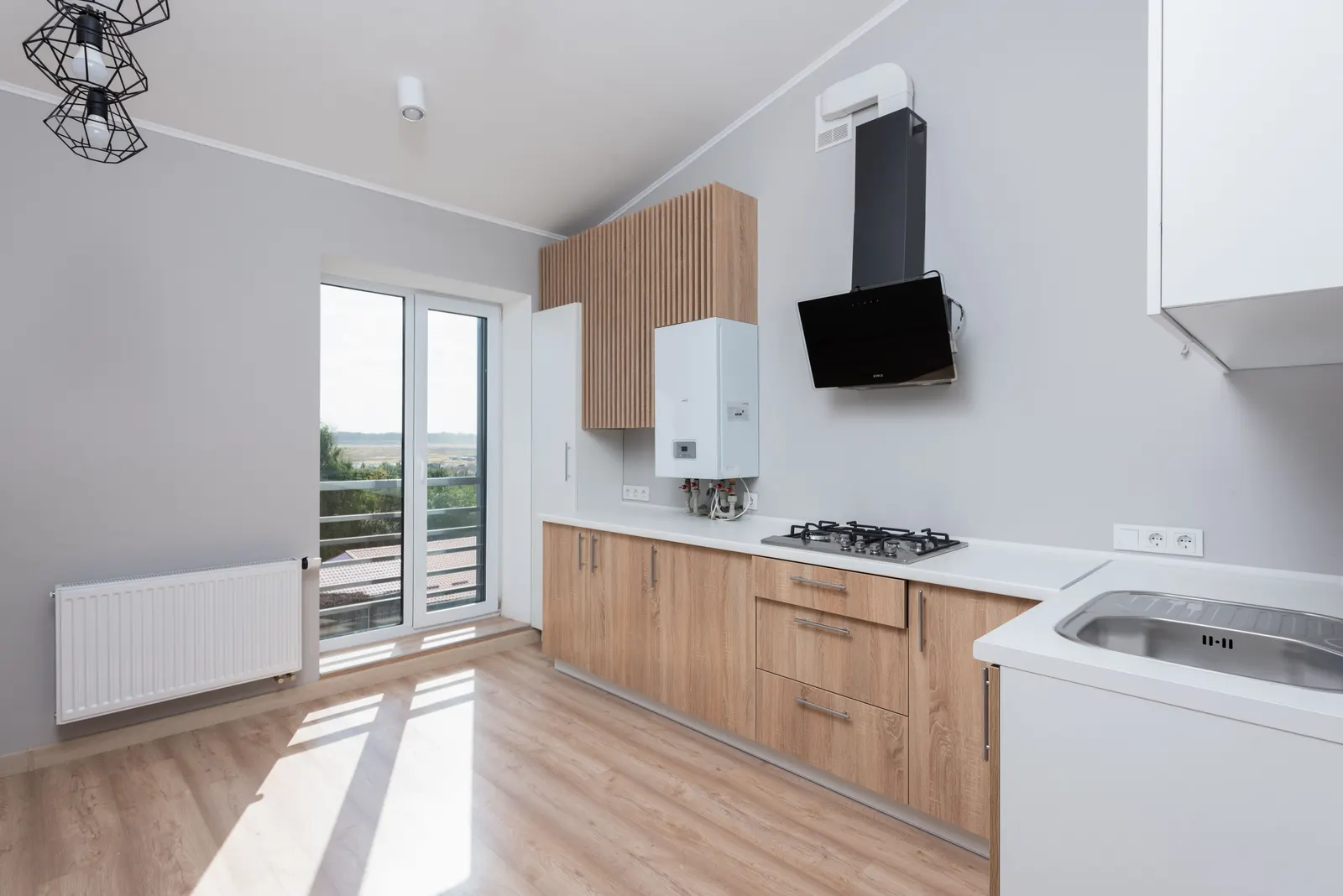
A Baxi combi should read 1 to 1.5 bar when cold and no more than about 2.5 bar when hot. Low pressure shows as E118 or E119, depending on the model, and is fixed by topping up through the filling loop under the boiler. High pressure, E117 on EcoBlue models, needs water letting out. If either keeps returning, a part has failed.
What pressure should my Baxi boiler be?
Baxi sealed systems are designed to run between 1 and 2 bar, and the sweet spot is 1 to 1.5 bar with the heating off and the radiators cold. Some newer Baxi models show the reading on the display; many others have a dial gauge underneath or on the front panel.
Always read it cold. Water expands as it heats, so a system that shows 1.3 bar in the morning may show 1.8 bar with the heating on, and that is fine. What matters is the cold number, and whether it stays the same from one week to the next.
- Below roughly 0.5 bar: most Baxi combis lock out with a low-pressure code, and the EcoBlue guide asks for a top-up below 0.7 bar
- 0.5 to 1 bar cold: low, top up before it trips
- 1 to 1.5 bar cold: correct
- Around 2 bar cold, or close to 3 bar hot: too high, an EcoBlue will show E117 near 3 bar
Baxi boiler pressure low: E118 and E119
Baxi uses two codes for low pressure, depending on the generation. The EcoBlue range and many newer Baxi models show E118. E119 appears on many other Baxi combis, including the Duo-tec, where the small display splits it into E1 and 19, and means the water pressure switch has not been operated, which in practice nearly always means there is too little water. Our page on the Baxi E119 code covers that code on its own.
Baxi combis are topped up through a filling loop: two small isolating valves under the boiler or on the pipework nearby, one on the cold mains and one on the heating side, joined by a filling hose. On some installations the hose stays in place; on others it is a separate piece you connect for the top-up and take off afterwards. Either way the method is the same.
- Turn the boiler off and let it cool
- If the loop is the removable kind, connect it and make sure both ends are tight
- Open the first valve fully, then open the second slowly until you hear water
- Close both valves when the gauge reads 1 to 1.5 bar
- Disconnect a removable loop, holding a cloth for the drips, and store it near the boiler
- Switch back on; if the code stays, follow resetting a Baxi boiler
The loop must be closed and, where it is designed to come off, removed after use. The Water Supply (Water Fittings) Regulations 1999 do not allow heating water to be left connected to the drinking supply.
Pressure too high on a Baxi boiler (E117)
On EcoBlue boilers E117 means the pressure has gone above 3 bar; other Baxi models may show a different code or just a high gauge reading. Before doing anything, turn the heating off and let the system cool, because a hot reading will be higher than the true fill.
Then check the filling loop valves are both fully shut. A loop left slightly open is the most common reason a Baxi creeps up, and it is common after someone has topped up in a hurry. Bleed the radiator nearest the boiler to let water out, a little at a time, until the cold reading is back at 1.5 bar. If you would rather not use a radiator, lowering pressure without bleeding radiators explains the drain-off valve route.
If the pressure climbs again with the loop shut, the cause is inside the boiler. When it jumps only while the heating is running, the expansion vessel has usually lost its air charge. When it creeps up slowly over hours or days even with the heating off, the plate heat exchanger may be letting mains water into the heating side. Both are engineer repairs.
The gauge reads fine but the code will not clear
This catches people out on Baxi boilers. You top up to 1.5 bar, the dial agrees, and E119 still shows after a reset. That usually means the part that tells the boiler about the pressure is faulty rather than the pressure itself.
Baxi combis use either a water pressure switch or a pressure sensor, depending on the model. It sits inside the casing and can stick, clog with sludge or lose their electrical connection. Air trapped around the pump can also stop the switch operating even when the system is full. None of this can be checked without taking the front off, so leave it at the reset and call it in.
What a Baxi repair involves and typical costs
An engineer starts by comparing the boiler reading with a test gauge, then isolates the filling loop to see whether it is passing. With the boiler side drained, they test the expansion vessel charge through its valve and recharge it if the diaphragm is sound. They check the pressure relief valve outlet outside for signs of discharge, bleed the pump and test the pressure switch or sensor. Gas work is carried out by Gas Safe registered engineers.
Typical UK market ranges for these repairs, parts and labour together, are about £80 to £180 for a pressure switch or sensor, £90 to £200 for a relief valve, £150 to £350 for an expansion vessel and £300 to £600 for a plate heat exchanger. Our Baxi boiler repair visit starts with the £60 call-out, and the repair price is agreed with you on site before any work starts.
Smell gas near the boiler? Do not reset anything. Open doors and windows, turn the gas off at the meter if you can get to it safely, touch no switches, then leave and call the National Gas Emergency Service on 0800 111 999.
Questions people ask
Why does my Baxi boiler keep losing pressure?
Water is getting out somewhere: a weeping radiator valve, the relief valve pipe outside, a joint under the floor or a leak inside the boiler. Topping up weekly hides the fault, so get the source found. Our guide to why pressure keeps dropping lists the checks.
Where is the filling loop on a Baxi combi?
Look under the boiler, or on the pipework close to it, for two small valves, one on the cold mains and one on the heating side, joined by a filling hose. On some models the loop is designed to be disconnected after use, so check the drawer or cupboard nearby. The user guide for your model shows its exact position.
Is 2 bar too high on a Baxi boiler?
With the heating on, 2 bar is normal. Cold, it is a little high. Let a small amount out through a radiator until it reads 1.5 bar, and check the filling loop is fully closed.
Can I use hot water if my Baxi combi pressure is low?
Not once it has locked out. A Baxi combi stops both heating and hot water on a low-pressure code, so topping it up restores both.
How often should I need to top up a Baxi boiler?
Ideally never between services. A sealed system that is watertight holds its pressure for months. Topping up once after bleeding radiators is expected; needing it every few weeks means water is leaving the system and the cause should be found before it corrodes the radiators or the boiler.