Leaks & burst pipes
How to Stop Pipes Freezing This Winter
Published
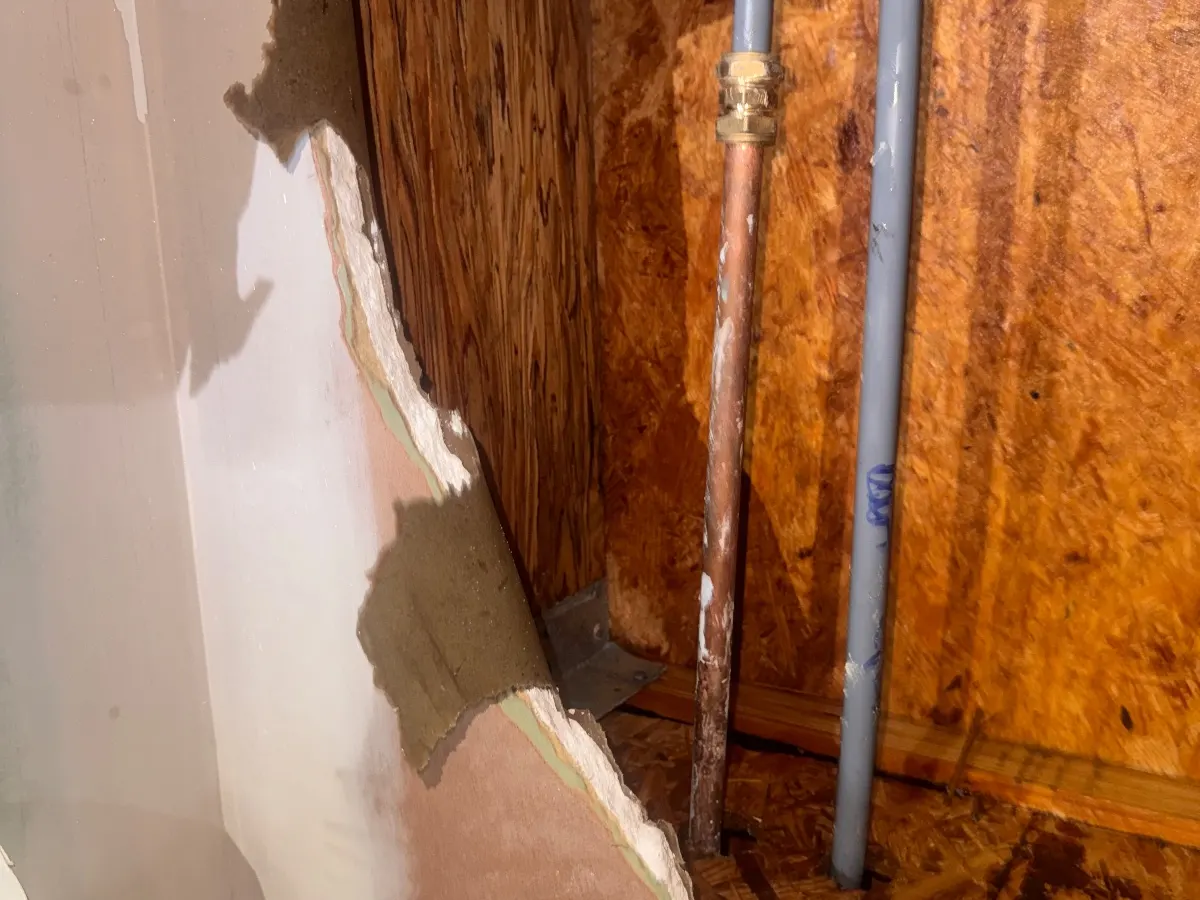
To stop pipes freezing, lag every pipe that runs outside the heated part of the house, with no gaps at joints, bends or valves. Insulate the loft tank on its top and sides but not underneath, isolate and drain the outside tap, and keep the heating on low rather than off during a cold snap or while you are away.
Which pipes in your home are actually at risk?
Pipes inside heated rooms almost never freeze. The ones that do are in the parts of the building that sit outside the warm envelope, or run close to an outside wall where cold air gets in. Walk round the house once, before the first frost, and look for these:
- Pipes in the loft, including the feed to the cold water tank and the pipes from it down to the cylinder
- Pipes under a suspended timber floor, especially near airbricks, which is common in Victorian and Edwardian terraces
- Pipes in a garage, utility room, porch or conservatory that is not heated
- Pipes running along or through an outside wall, including the kitchen pipes behind units on an external wall
- The outside tap and the pipe through the wall to it
- The boiler condensate pipe where it runs outside to a drain
- The supply pipe where it comes up through the floor, if it is shallow or exposed on the way in
Pipe lagging: how to fit it so it actually works
Foam pipe lagging comes as split tubes sized to the pipe, usually to fit 15mm or 22mm pipe, the two common household sizes, which are measured across the outside of the pipe. Buy the size that matches the pipe exactly; a tube that is too big leaves an air gap and one that is too small will not close. Where you have a choice, pick a thicker wall for loft and under-floor runs.
Most lagging fails at the gaps. Frost finds the one uncovered joint, elbow or valve, and that is where the pipe splits. When you fit it:
- Close the split along the whole length and tape it with the tape made for lagging, or use tubes with a self-sealing strip
- Cut 45-degree mitres at bends so the two pieces meet without a gap, and tape the joint
- Butt lengths tightly end to end and tape round each join
- Cover valves and stopcocks with a cut piece of lagging or a valve jacket you can still take off to use the valve
- Carry the lagging right to where the pipe enters a warm room or goes into the wall
Water regulations guidance is clear that insulation only delays freezing; it does not stop it in a long, hard frost. Lagging buys hours, which is usually enough overnight. For a pipe in a very exposed place, rerouting it or keeping the space above freezing is the lasting answer.
The loft tank and the pipes around it
If your house has a cold water storage tank in the loft, it and its pipes are the most likely things to freeze. The Water Supply (Water Fittings) Regulations 1999 require a cold water storage cistern to have a cover and thermal insulation to minimise freezing, and every water fitting to be installed so as to inhibit damage by freezing.
Insulate the top and sides of the tank with a fitted tank jacket or insulation board, and make sure the lid is on and fits. Do not insulate underneath it. If the loft insulation runs under the tank, remove that section so warmth from the house below can rise into the tank. A tank wrapped on all sides, or sitting on a thick layer of loft insulation, is cut off from the only heat it gets.
Lag the rising main that feeds the tank, the overflow pipe as far as the eaves, and the pipes from the tank down to the cylinder. Check the float valve moves freely, because a stuck ballcock that lets the tank overfill can freeze the overflow and flood the loft; a loft tank ballcock that sticks explains how to check it.
Outside taps and under-floor pipes
An outside tap sits in the coldest spot of any fitting in the house. Many have an isolating valve on the pipe inside the house, often under the kitchen sink. Before the first frost, close that valve, then open the outside tap to drain the short length of pipe between the two and leave it open. Fit an insulated cover over the tap. If there is no inside isolating valve, having one fitted is a small job worth doing. More on this in an outside tap that is leaking or frozen.
Under a suspended floor, lag the pipes rather than blocking the airbricks. The airbricks ventilate the void and keep the joists dry; covering them leads to rot. If a pipe in the void runs right past an airbrick, lagging it with the thickest tube that fits is the answer, or having it moved away from the opening.
For the boiler condensate pipe, the outside run should be as short as possible, of a wider bore where it runs outside, and lagged with weatherproof insulation. If yours freezes most winters, a condensate pipe that is leaking or blocked covers the fixes.
Heating settings during a cold snap
The cheapest protection is warmth. During a spell of hard frost, keep the heating on at a low setting through the night rather than switching it off, or set the timer so it comes on briefly in the early hours when temperatures are lowest. Leave the loft hatch open for a few hours on the coldest nights and open kitchen cupboard doors on outside walls so warm air reaches the pipes behind the units.
Many modern boilers have built-in frost protection that fires the boiler if the water inside it gets close to freezing. That protects the boiler, not the pipes in the loft or under the floor, so do not rely on it for the rest of the house.
If the house will be empty over winter
A pipe that freezes and bursts in an empty house can run for days before anyone notices. Home insurance policies often restrict escape of water cover once a home has been unoccupied for a set period, often 30 or 60 consecutive days, and may require the heating to be kept on or the system drained down. Check your policy wording before you go.
For a shorter trip, keep the heating on low or on a daily timer, turn the stopcock off if nothing needs water while you are away, and ask someone to look in regularly. For a long absence, or a property between tenants, draining the system down is the safest choice. A pipe that burst while you were away covers what to do if it has already happened.
If a pipe has frozen despite all this, how to thaw frozen pipes safely goes through it step by step. If one has already split, our burst pipe emergency repair visit is the next step; the £60 call-out gets an engineer to you at any hour, and the repair price is agreed with you on site before any work starts.
Questions people ask
Does pipe lagging stop pipes freezing?
It slows the loss of heat, so it delays freezing rather than preventing it. Properly fitted lagging with no gaps is usually enough to get a pipe through a cold night, but not through days of hard frost in an unheated space.
What temperature do pipes freeze at?
Water freezes at 0°C, but a pipe in a sheltered loft or void usually needs the air around it to stay below freezing for several hours first. Exposed pipes near vents, airbricks or on outside walls freeze soonest.
Should I leave the heating on to stop pipes freezing?
During a cold snap, yes, at a low setting or on a timer that brings it on in the early hours. It costs far less than a burst pipe. Leaving it off entirely is when unlagged loft and under-floor pipes freeze.
Should I drip a tap to stop pipes freezing?
It can help a single exposed pipe, because moving water freezes more slowly, but it wastes water and does not protect other runs. Lagging, warmth and draining the outside tap are better answers for a UK home.