Leaks & burst pipes
Pipe Burst While You Were Away
Published
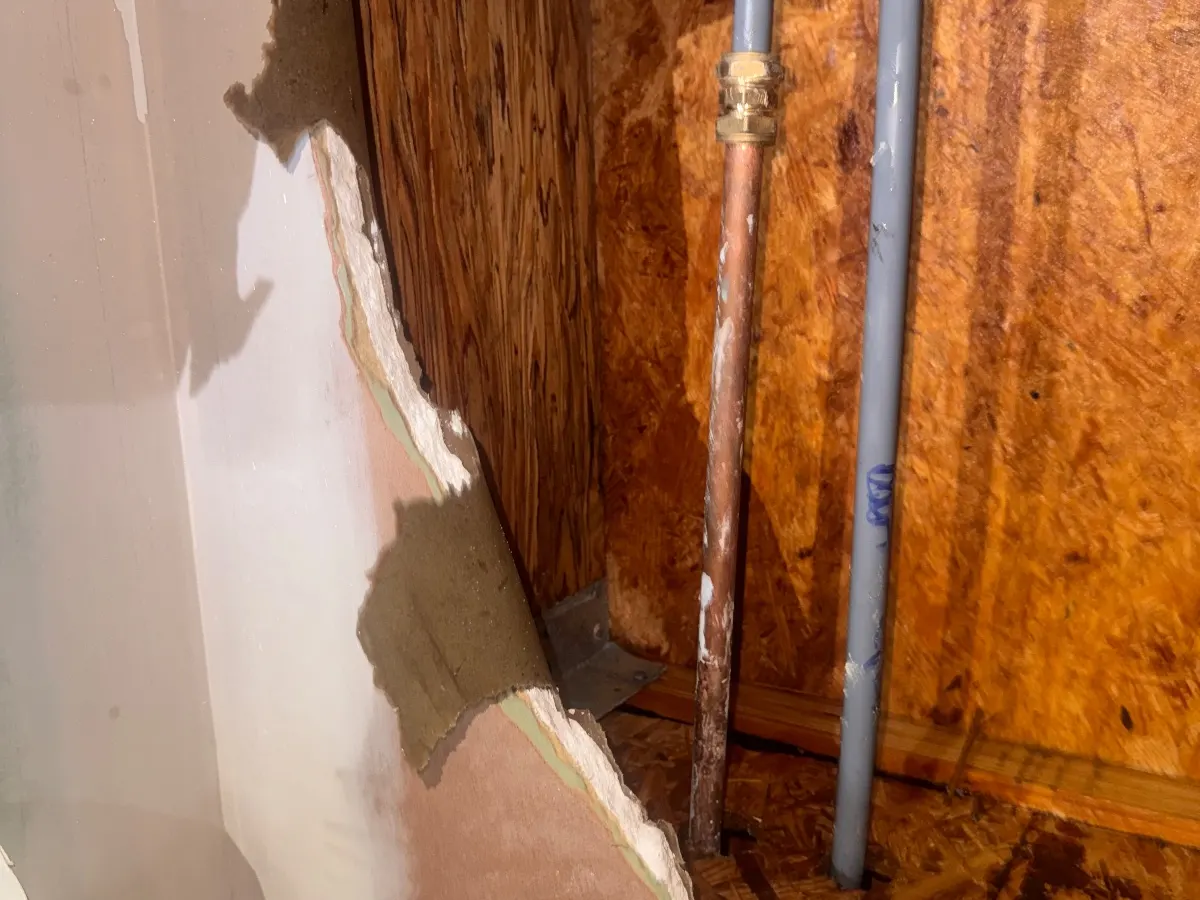
Do not switch on lights or walk under a sagging ceiling. Turn the water off at the stopcock, switch the electricity off at the consumer unit if water has reached any fittings and you can reach the unit dry-footed, then photograph everything before you move it. Call your insurer, get the burst repaired, and be ready to explain how long the property was empty.
The first five minutes: safety before anything else
Water that has run for days behaves differently from a burst you catch as it happens. It has had time to reach the wiring, soak through ceilings and fill the void under a floor. Before you deal with the pipe, deal with the two things that can hurt you.
- Electrics: if water has come through a ceiling light, reached sockets or is anywhere near the consumer unit, do not touch switches. Switch off the main switch at the consumer unit only if you can reach it standing somewhere dry. If the board itself is wet, leave it and call the network operator on 105
- Ceilings: a ceiling that has a bulge or a belly of water can come down in one piece, and wet plasterboard is heavy. Keep out from under it. Leave releasing the water to the plumber or a builder, and put buckets and a sheet down around it from a safe distance
- Floors: floorboards and chipboard that have been soaked for days can give way. Walk along the line of the joists, near the walls
If you can smell gas when you walk in, do not touch any switch. Open doors and windows, turn the gas off at the meter if you can reach it safely, then go back out and call the National Gas Emergency Service on 0800 111 999.
Stop the water, then find the burst
Close the internal stopcock, usually under the kitchen sink or where the supply comes through the floor. If it will not turn or the water keeps running, close the outside stop tap in the pavement or front garden, which usually needs a long stop tap key. Our guide on where to find your stopcock covers the usual places, including flats where it can be in a cupboard in the communal hall.
With the mains off, open the hot and cold taps downstairs to drain what is left in the pipes. If you have a cold water tank in the loft, the water in it will keep feeding the burst on some circuits. Open the bath and basin taps upstairs to empty it, or close the gate valve on the pipe leaving the tank. Turn off the boiler and any immersion heater so they do not run without water.
Then look for the source. After a winter absence the usual culprits are pipes in the loft, in an unheated garage or utility, on outside walls and under floors near air bricks. The other common one is not a frost burst at all: a flexible tap connector under a sink or bath, or a washing machine hose, that simply gave way. These fail in any season, and with no one home the water runs until it is noticed.
Record the damage before you move anything
Insurers will want to see what you found. Take wide photographs of each room from the doorway, then close-ups of the burst itself, water marks, damaged ceilings and flooring, and wet furniture and electrical items. Film the burst if it is still dripping. Photograph the stopcock position and your water meter reading, and note the time.
Keep the failed piece of pipe or the burst hose after the repair. It shows the claims handler whether it split from frost or failed on its own. We cover this in more detail in our guide to repairing a leak before the insurer visits.
Getting the burst repaired
A burst that has been isolated can wait for daylight if you have no water need. If you need water, need the heating back because it is freezing, or cannot stop the flow, it needs doing tonight. The fix is usually to cut out the split section and join in a new length, then refill slowly and check every joint on that run. After a freeze, the engineer should check the rest of the exposed pipework too, because frost rarely splits just one place.
Bring the system back up in stages: open the stopcock partly, listen for running water, check under floors and in the loft, then open fully. If you have a combi or system boiler, check its pressure gauge and top it up before you fire it. Gas work is carried out by Gas Safe registered engineers.
Book burst pipe repair at any hour. The £60 call-out covers the visit, and the repair price is agreed with you on site before any work starts.
The insurance question: how long were you away?
Most home insurance policies have an unoccupancy clause. The Financial Ombudsman Service says the period is usually 30 or 60 days, and after it cover for escape of water, theft and malicious damage is often restricted or removed. Some policies also set winter conditions for empty homes, such as keeping the heating on at a minimum temperature or draining the water system. Read your schedule before you call so you know where you stand.
Policies rarely define “unoccupied” clearly. The ombudsman has said it may treat a home as occupied if someone visited reasonably frequently, even if nobody slept there. If a neighbour or relative was checking the house, tell the insurer and give the dates.
Claim promptly. Tell the insurer as soon as you are home and safe, and do not start stripping out rooms before they have seen the damage. Emergency work to stop the water and make the property safe is expected; reinstatement usually needs their agreement. For what policies tend to cover, see what water damage insurance covers.
Before the next time you go away
An empty home bursts a pipe when it gets cold, nobody looks in, and the mains is still live. Each of these steps takes one of those away, and the full checklist for leaving home for a week adds what to check when you get back.
- In winter, leave the heating on a low setting or on the boiler’s frost protection, and keep loft hatches and under-sink cupboards open a crack so warm air reaches the pipes
- For longer trips, turn the water off at the stopcock and open the taps briefly to relieve the pressure. With a combi, check the manual before draining anything, because frost protection needs the boiler to have water and power
- Lag exposed pipes in the loft, garage and outside walls, and fit a cover on any outside tap
- Ask someone to check the house every few days, and keep a note of their visits for your insurer
- Replace old flexible tap connectors and washing machine hoses that look swollen, rusty or kinked
A leak detector that alerts your phone, or an automatic shut-off valve fitted after the stopcock, turns a week of running water into a few minutes of it.
Questions people ask
Am I covered if a pipe burst while the house was empty?
It depends on how long. The Financial Ombudsman Service says unoccupancy clauses usually start after 30 or 60 days, after which escape of water cover is often limited. Check your policy schedule.
Should I turn the electricity off after a burst pipe?
If water has reached lights, sockets or the consumer unit, yes, at the main switch, but only if you can reach it from somewhere dry. Have an electrician check before you turn it back on.
Can I stay in the house after a pipe burst?
Often yes, once the water and electrics are safe. If ceilings are down, the electrics cannot be used or there is no water or heat, many buildings policies include cover for alternative accommodation.
Should I leave the heating on when I go away in winter?
Yes, on a low setting or frost protection. Frost in an unheated loft or outside wall is the most common cause of a burst in an empty home.