Toilets, taps & fixtures
Leaking Toilet Cistern: Where the Water Comes From
Published
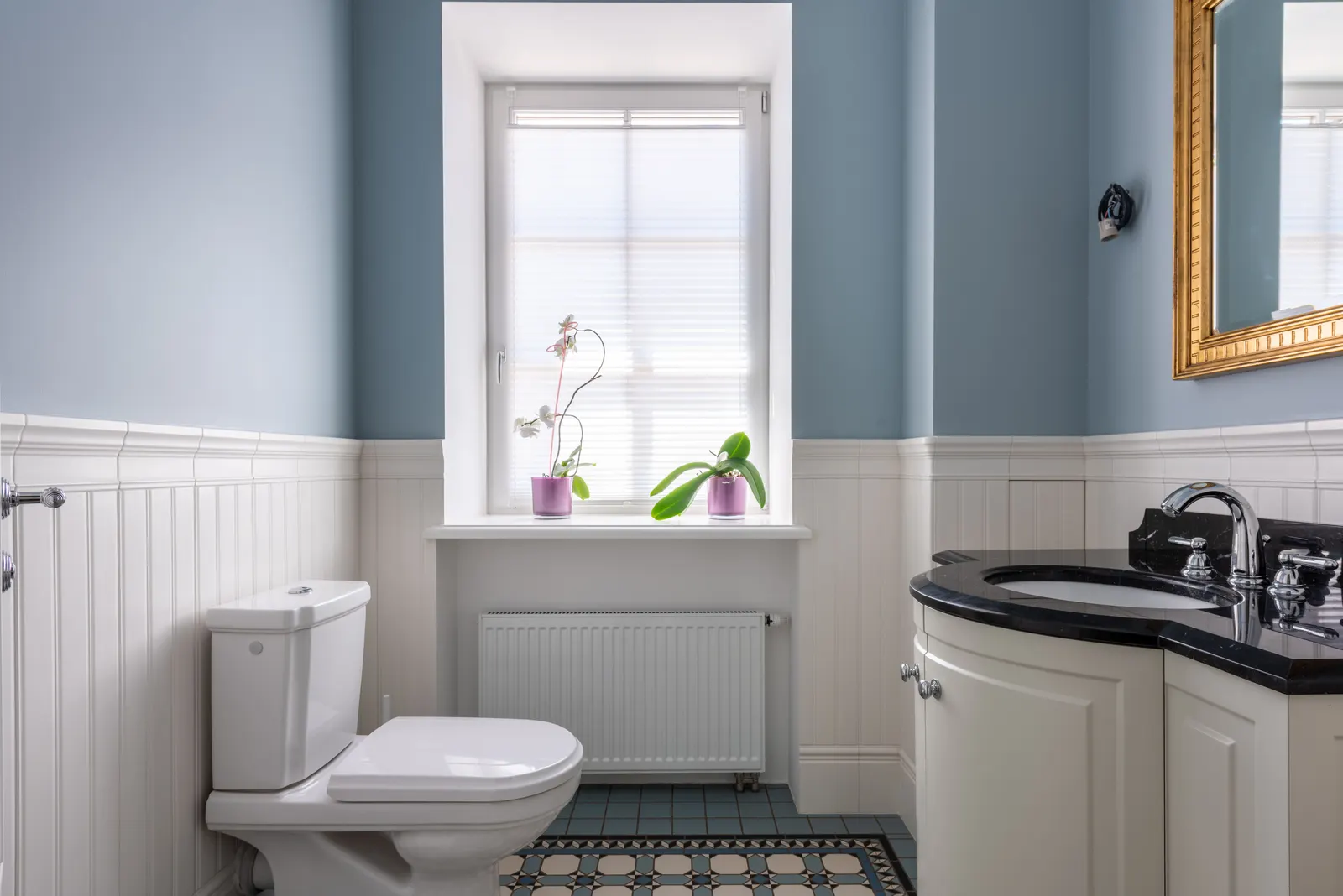
A leaking toilet cistern nearly always leaks from one of five places: the supply connection, the fill valve tail, the cistern-to-pan seal, the bolts through the cistern base, or condensation on the outside. Dry everything, press dry tissue on each point and see which gets wet first. Then turn off the isolation valve.
Is the cistern really leaking, or is it something nearby?
A puddle behind the toilet does not prove the cistern is the source. Water runs along the underside of the cistern and down the back of the pan, so it can appear several inches from where it started. Before blaming anything, take ten minutes to trace it properly.
Turn the isolation valve on the pipe feeding the cistern a quarter turn with a flat screwdriver, so the slot sits across the pipe. Dry the floor, the pipe, the back of the pan and the whole underside of the cistern with a towel. Then turn the valve back on, fold a sheet of dry toilet tissue and press it against each point below for a few seconds. The first sheet that comes away damp is your leak.
- The supply pipe and its isolation valve, where the pipe meets the cistern
- The threaded tail of the fill valve poking out of the cistern, and the plastic back nut on it
- The large rubber seal between cistern and pan on a close-coupled toilet
- The two or three bolts that hold the cistern to the pan or the wall, and their rubber washers
- The outside faces of the cistern, if they are beaded with water all over
If the tissue test shows water only after you flush, and the wet patch is behind the pan near the floor, the leak is probably not the cistern at all. It is the pan connector or the pan seal, both covered in finding a leak at the base of the pan.
Leaking under the cistern only when you flush
A toilet leaking under the cistern for a few seconds after each flush points at the path the flush water takes out of the cistern. On a close-coupled toilet, where the cistern sits directly on the back of the pan, that path runs through a flush valve or siphon and then through a thick rubber cone known in the trade as the doughnut washer. When the doughnut flattens with age, or the cistern has been knocked slightly off square, flush water escapes around it and drips from between cistern and pan.
On a low-level toilet, with a cistern on the wall and a short pipe down to the pan, the same job is done by a rubber flush pipe cone where the pipe enters the back of the pan. Those cones harden and crack, and the leak shows as a trickle down the back of the pan every flush. Low-level toilet problems covers that layout in more detail.
A doughnut washer or flush cone is a cheap part, from about £2 for a generic one to around £15 for a maker’s own kit, but it has to fit your toilet. Siphon cisterns and drop-valve cisterns use different seals, and many makers use their own. Take a photo of the inside of the cistern and the underside before you buy anything.
Water on the floor all the time: the supply side
If the tissue gets wet while nobody has flushed, water is escaping from something that is always under mains or tank pressure. That is almost always the supply side of the cistern, and it will not stop on its own.
Check the joint where the flexible hose or copper pipe screws onto the fill valve tail. On most modern cisterns there is a fibre or rubber washer inside that connector, and a slow drip there is usually a washer that has dried out or a nut that has worked loose. Hand-tighten, then a quarter turn with a spanner at most. Over-tightening plastic threads is the classic way to turn a drip into a crack. A toilet inlet valve leaking goes through that joint step by step.
If the wet tissue is on the isolation valve itself, the valve is weeping around its screw or at one of its compression nuts. See an isolation valve leaking for why that happens after the valve is turned, and how to deal with it without draining the house.
Bolts, cracks and condensation
Close-coupled cisterns are held down by bolts that pass through the bottom of the cistern, with a rubber washer on the inside to stop water following the bolt. When those washers perish, or the bolts rust, water beads underneath each bolt head and drips straight down. The cure is new bolts and washers, which usually means draining the cistern and lifting it off. Most toilet makers sell a fixing kit, and generic kits cost a few pounds.
A hairline crack in a ceramic cistern shows as a line of damp that stays wet even after the rest has been dried. Look closely with a torch, especially around the bolt holes and the corners, where cracks tend to start after a bolt has been over-tightened. A cracked cistern cannot be repaired reliably. Sealants may hold for a while, but a crack under constant water pressure tends to grow, and the only proper fix is a new cistern that matches the pan, or a new toilet.
Condensation is the most common false alarm. On a cold day, or after a shower, a cistern full of cold mains water sweats all over its outside, and the drips collect on the floor behind the toilet. If every face of the cistern is evenly beaded and the tissue test finds no single point, this is condensation. Ventilation, an extractor fan left running after showers, or an insulated cistern liner deals with it; no plumbing repair will.
When a leaking cistern cannot wait until morning
Most cistern leaks are slow and can be contained by turning off the isolation valve and using the toilet by filling it from a bucket. It becomes urgent when the valve will not shut, when water is spraying from a split hose or cracked valve body, or when the leak is on an upper floor and a ceiling below is showing a stain.
If the isolation valve will not turn or does not stop the flow, shut the main stopcock. How to turn off a stopcock covers stiff ones. Then check the room below. A brown ring or a sagging patch on the ceiling under a bathroom means water has been getting into the floor void for some time; a ceiling leak below a bathroom explains what to do about that before it comes through.
Our toilet repair visit starts with the £60 call-out at any hour, and the repair price is agreed with you on site before any work starts.
What a plumber does with a leaking cistern
The first job is the same tissue test, done more quickly. After that the work depends on the leak point. A supply washer or loose nut is a few minutes. A new fill valve means isolating, draining and swapping the valve, then setting the float so the water stops at the level marked inside the cistern. A doughnut washer or cistern bolts means isolating, draining, disconnecting the supply, lifting the cistern off the pan, cleaning both faces, fitting the new parts and tightening the bolts evenly so the cistern sits level without stressing the ceramic.
As a typical market guide, straightforward cistern repairs usually cost somewhere between £80 and £180 including common parts, and a replacement close-coupled cistern fitted to an existing pan more, depending on whether a matching cistern is still made. If your toilet is old enough that its cistern is discontinued, it is often cheaper to replace the whole toilet than to hunt for a matching part.
Under the Water Supply (Water Fittings) Regulations 1999, a toilet fitted today must clear the pan with a flush of no more than 6 litres, and every flushing cistern must have a warning pipe or a device that is no less effective. That second rule is why most modern cisterns overflow into the pan rather than through a pipe in the wall. If your cistern is leaking into the bowl rather than onto the floor, that is a different fault, covered in a toilet leaking into the bowl.
Questions people ask
Why is my toilet leaking from the cistern onto the floor?
Usually one of five things: the supply connection, the fill valve tail, the cistern-to-pan seal, the cistern bolts, or condensation. Dry everything and press dry tissue on each point to find which one is wet first.
Can I still use a toilet with a leaking cistern?
If the leak is only when flushing, you can usually keep using it with a towel down until it is fixed. If water is escaping all the time, turn off the isolation valve and flush by pouring a bucket of water into the pan.
Will silicone stop a leak under the cistern?
Not for long. Silicone does not seal against a moving joint under water pressure. A leak between cistern and pan needs a new doughnut washer or bolt washers, and a cracked cistern needs replacing.
How do I tell condensation from a real cistern leak?
Condensation beads evenly over every face of the cistern and is worst on cold, humid days. A real leak wets one point first, such as a bolt, a joint or the gap between cistern and pan.