Water supply problems
No Water in the House but Neighbours Have Water
Published
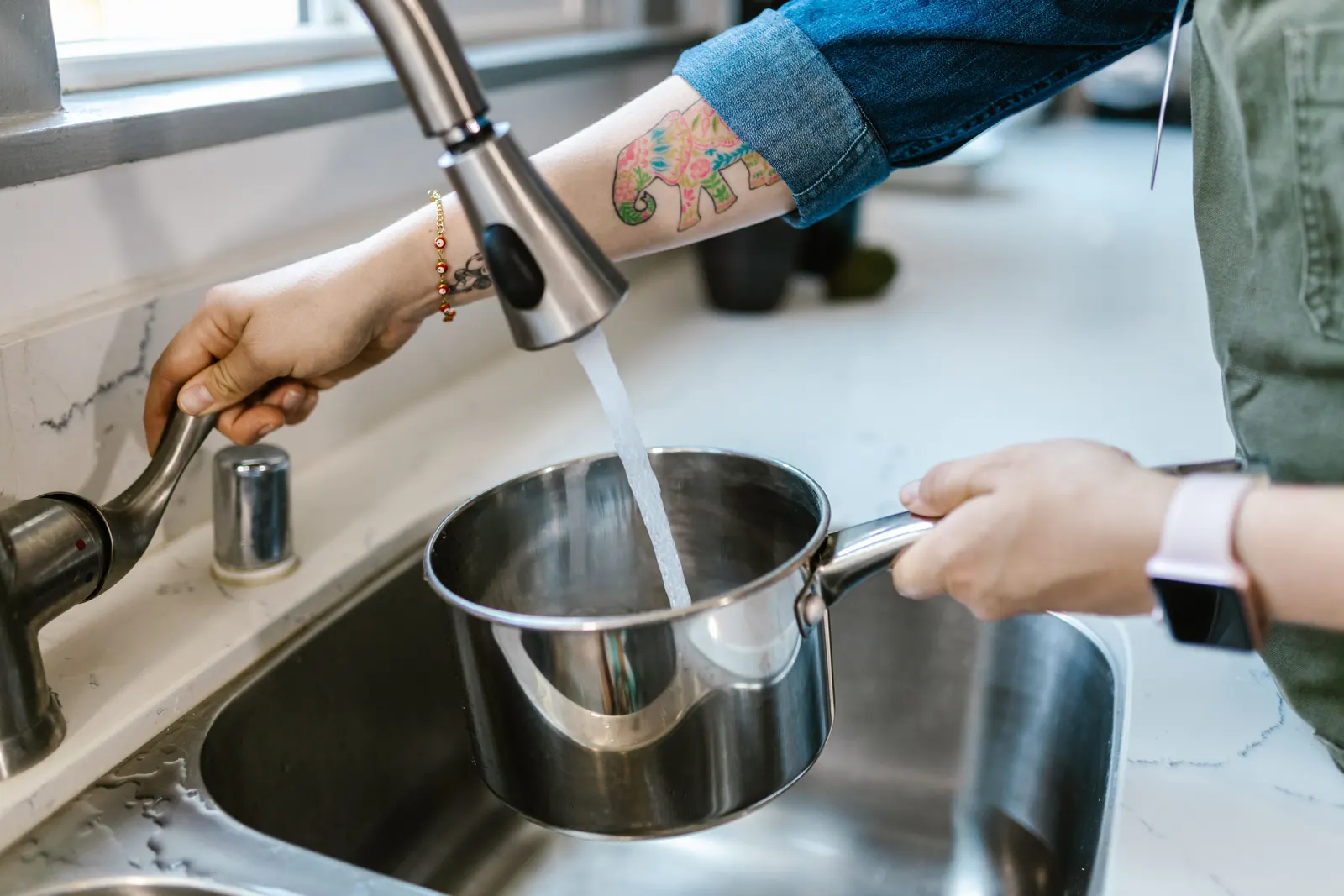
If you have no water in your house but the neighbours do, the fault is almost always between the street and your taps, usually on your own pipework. In order, check the internal stopcock is open, the outside stop tap has not been shut, no pipe has frozen, and the meter for a burst supply pipe. On older houses, a stopcock that turns but stays shut inside is a frequent culprit.
Which taps have no water?
Before you touch anything, go round the house and try every tap, including the toilet flush. The pattern tells you where to look.
- Nothing anywhere, including the kitchen cold tap: the mains is not reaching the house. Work through the stopcock checks below.
- Kitchen cold tap works, bathroom taps and toilets do not: you have a loft tank and it has run dry, usually because its float valve has stuck or its supply has been isolated.
- Cold works, no hot water at any tap: this is a boiler or cylinder fault, not a supply one. See our guide to no hot water from the taps.
- One tap or one shower only: a blocked aerator, a failed cartridge or a local isolating valve that has been turned off.
If water is pouring from a ceiling, wall or floor anywhere in the house, that is why the taps are dry. Turn the stopcock off fully and go to our burst pipe guide.
Is the stopcock open, and is it working?
The internal stopcock is usually under the kitchen sink, where the rising main comes through the floor. In older houses it can be in a hallway cupboard, under the stairs, in the cellar or under a floorboard just inside the front door. Our guide to finding your stopcock covers every usual spot.
Turn the handle anti-clockwise to open it. If it turns freely and water arrives, someone had closed it, perhaps a previous tradesperson or a child. If it opens fully but still no water comes, the stopcock may have failed inside.
The classic failure on older brass stopcocks is a stuck jumper. The washer that seals the valve sits on a small loose plate called a jumper, which normally lifts off its seat with the flow when you open the handle. Scale can glue it to the seat, and on a stopcock fitted the wrong way round the mains pressure holds it down. Either way the spindle rises, the jumper stays put, and the valve looks open while staying shut. You cannot fix this from outside the valve, and forcing the handle risks snapping an old spindle.
Never use pliers or a wrench on a stopcock handle that will not move. Old spindles shear off, and a broken stopcock cannot be closed again in an emergency.
Has the outside stop tap been turned off?
Your boundary stop tap sits under a small cover in the pavement or at the edge of the front garden, often beside or combined with the water meter. Water company crews, meter installers and builders working next door sometimes shut the wrong one, especially in a terrace where the covers sit side by side.
Lift the cover and look. Some have a lever or a square head that needs a long key to reach. If the tap is visibly off or a meter has recently been fitted, call the water company and ask them to check it rather than trying to force it open yourself. The boundary tap and the pipe up to it are theirs to check and operate.
If you have recently had work in the street, see no water after roadworks for the other ways a dig can cut off one house.
Could a pipe be frozen or burst underground?
In a cold snap, a pipe in an outside wall, an unheated garage, a loft or the ground under a porch can freeze solid while the rest of the street is fine. Frost on the pipe, a bulge or a split are the signs. Turn the stopcock off and open the taps first, so a split cannot flood as it thaws. Then thaw it slowly with a hot water bottle, warm cloths or a hairdryer on low, working from the tap end back towards the frozen section, and never with a blowtorch. Our guide to frozen pipes goes step by step.
A burst supply pipe under the garden or path usually drops pressure first rather than cutting water completely, but a large failure can starve the house. Use the meter to check. With every tap and appliance off, note the reading, wait 30 minutes and read it again. Movement with nothing running means water is escaping somewhere between the meter and your taps. Reading a water meter shows which dials to watch. A wet patch in the front garden or water around the stop tap cover in dry weather backs it up.
Less common causes an engineer checks next are a pressure reducing valve that has failed closed, a water softener left in the wrong position after servicing, and in old houses a lead or galvanised iron supply pipe so furred with scale that very little gets through.
What the engineer does to get your water back
On a no water emergency call-out the engineer works from the street inwards. First, confirm there is pressure at the boundary, which settles whether it is your problem or the water company’s. Then the internal stopcock: if it has a detached jumper or a seized spindle, the usual fix is to replace it with a new stopcock or a quarter-turn valve, which takes an hour or two once the supply is isolated at the boundary.
If the fault is a frozen section, the engineer thaws it and checks for splits before turning the water back on. If it is a burst supply pipe, the job is to find the leak, isolate it and either make a buried repair with a coupling or, for a long run of old lead or iron, plan a replacement in blue MDPE pipe.
You pay the £60 call-out, and the repair price is agreed with you on site before any work starts. As a market guide, a stopcock replacement is normally a modest job, a single underground joint repair often runs to a few hundred pounds, and replacing a whole supply pipe under a front garden commonly costs four figures depending on length and what has to be dug up. Our stopcock repair service has more on that part of the job.
Questions people ask
Why do I have no water but my neighbours do?
The fault is almost always between the street and your taps, usually on your side of the boundary. The common causes are a closed or failed internal stopcock, an outside stop tap shut by mistake, a frozen pipe or a burst supply pipe underground.
Who do I call if I have no water in my house only?
A plumber, because the pipework on your side of the boundary is your responsibility. Call the water company only if you think the boundary stop tap has been shut or there is no pressure reaching your boundary.
Can a stopcock look open but be shut?
Yes. On older stopcocks the loose jumper that carries the washer can stick to its seat, so the handle turns but no water passes. The stopcock needs replacing.
Why do I have water downstairs but not upstairs?
Your upstairs taps and toilets are probably fed from a cold water tank in the loft that has run dry. Check the float valve in the tank has not stuck, and that the isolating valve on its supply pipe is open.