Toilets, taps & fixtures
Toilet Blocked and Water Rising: What to Do Before You Plunge
Published
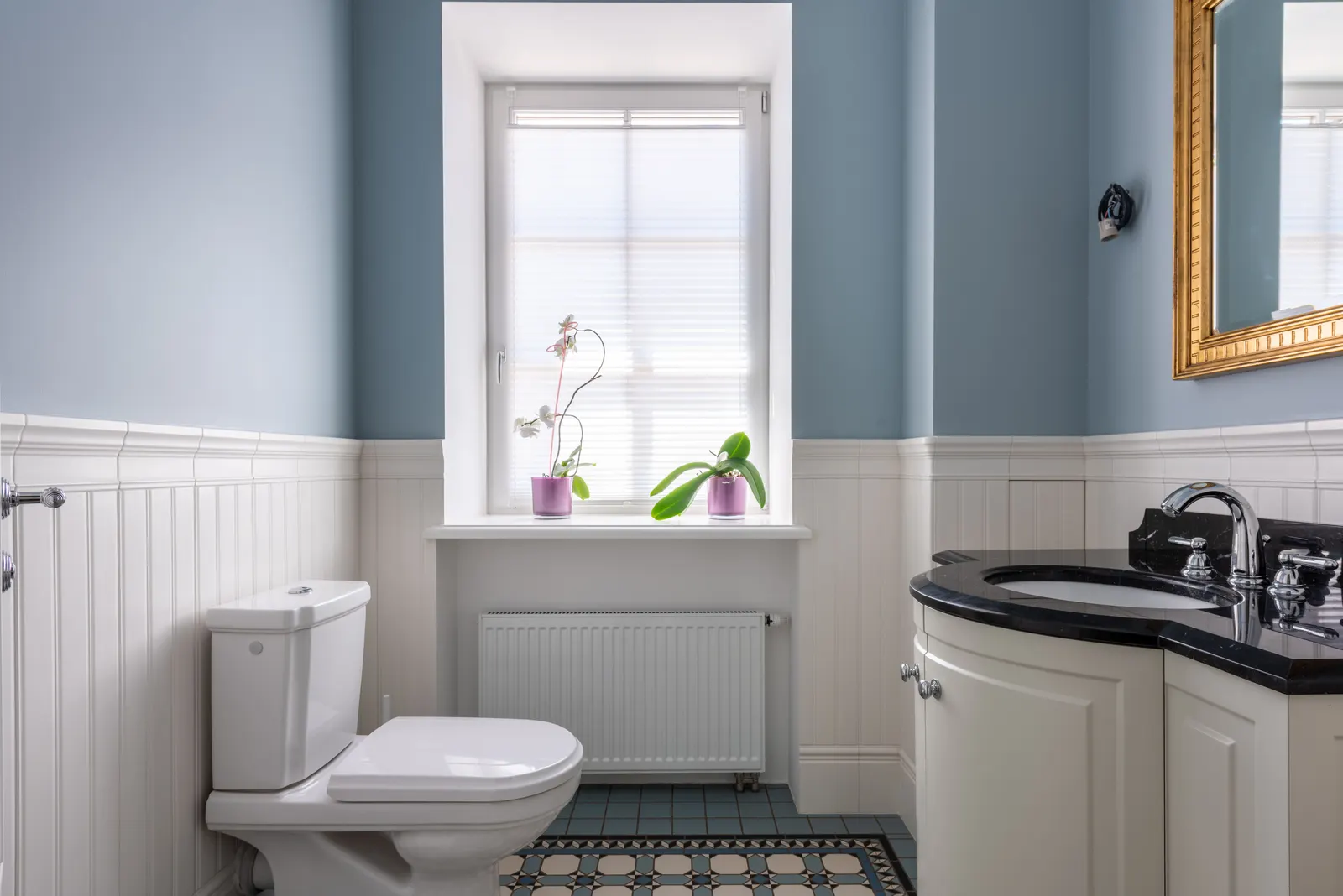
If the toilet is blocked and the water is rising, do not flush again. Take the cistern lid off and lift the float, or close the isolation valve on the pipe feeding the cistern, so no more water comes in. Once the level stops climbing, bail the pan down to half and plunge with a flanged plunger.
Stop the water coming in first
Unless the drain itself is backing up (covered further down), the water rising in a blocked pan comes from the cistern. The flush dumps its full load into the pan, and if the flush valve is leaking, the button has stuck or the cistern is overflowing internally, water keeps trickling into the pan as the cistern refills. With nowhere to go, it creeps towards the rim. So the first job is to stop the cistern filling, and it takes seconds.
- Take the lid off the cistern. On a push-button toilet you may need to unscrew the button ring first, then lift the lid straight up
- Find the float. On an older cistern it is a ball on an arm; on a newer one it is a plastic cup or cylinder that slides up and down the fill valve. Lift it up and hold it: the hissing stops
- Close the isolation valve while you hold the float. It is on the pipe that feeds the cistern, usually low down on the wall or under the cistern, and has a screwdriver slot or a small lever. A quarter turn so the slot sits across the pipe closes it
- No isolation valve, or it will not turn? Tie the float arm up to a piece of wood laid across the cistern, or turn off the stopcock
If the pan has already overflowed, turn off electrics in the bathroom at the consumer unit if water has reached a shaver socket, extractor or electric shower and the unit is dry and clear of the water, and keep people off the wet floor. Water on a floor above a ceiling will come through; put a bucket under any bulge below.
Get the level down before you plunge
Plunging a brim-full pan pushes dirty water over the rim with every stroke. Leave the pan with just enough water to cover the cup of the plunger, which is usually about half full.
Wear rubber gloves and use an old jug or plastic container to bail the excess into a bucket. Keep the bucket covered and flush the contents away once the toilet is clear. Do not tip it into a sink, bath or outside drain: if the blockage is in the drain, those fittings share the same route and will back up, and some outside gullies take only rainwater and run to a river.
Put old towels round the base of the pan and lay a bin bag under them if you can. Keep children and pets out of the room.
How to plunge a toilet so it works
A cup plunger from under the kitchen sink will not seal in a toilet. You need a flanged plunger, the kind with a soft rubber sleeve that folds out of the bottom of the cup. The sleeve goes into the outlet at the bottom of the pan and makes the seal.
- Push the flange into the outlet with the cup covered by water. Water pushes much better than air
- Press down slowly the first time to squeeze out the trapped air, so it does not blow water back at you
- Then work it firmly up and down ten to fifteen times, keeping the seal, and pull it off sharply on the last stroke
- Watch the level. If it drops with a gulp, the blockage has moved. Test it with a bucket of water poured in briskly: if that goes away cleanly, open the isolation valve and flush once with the lid down
- If the level barely moves after three or four rounds, stop. Pushing harder can blow the seal on the pan connector behind the toilet or force the blockage deeper into the pipe
No chemical drain unblockers in a toilet. They sit in the standing water, rarely reach the blockage, and make the water dangerous for anyone who then plunges it or puts a tool in. Never mix two products, and never plunge after using one. Kettle-boiling water can crack a cold ceramic pan; if you want to try hot water, use it from the tap.
When the water rises because the stack or drain is blocked
Some rising water is not a pan blockage at all. Before you keep plunging, check what the rest of the house is doing.
- The bath or basin gurgles when you flush, or the shower tray fills with dirty water: the soil pipe or drain is blocked beyond the toilet
- The toilet level rises when you run the bath or the washing machine empties: the same, and plunging will only move the problem between fittings
- The downstairs toilet fills when someone upstairs flushes: the blockage is below the downstairs toilet, in the stack or the underground drain
- An inspection chamber in the garden or path is full, or a cover has lifted: the underground drain
If sewage is coming into the house from outside, stop using every toilet, sink and appliance on that drain until it is cleared. The first steps outside are in a manhole overflowing or an outside drain blocked.
Stack, drain or sewer: whose is it to clear?
Inside a house, the toilet, the soil stack and any drain that serves only your home, up to your boundary, are yours. In England and Wales, since 1 October 2011, a drain or sewer that serves more than one property, or runs outside your boundary, belongs to the water company, and clearing it costs you nothing. Lift your inspection chamber: if it is clear, the blockage is between the toilet and the chamber and is yours; if it is full and the next chamber downstream is also full, report it to the water company. Our guide on whose job a blocked drain is walks through the chamber checks.
In a flat, the pan and the branch from it to the stack are normally yours, and the stack and the drains under the building are normally the freeholder’s. If your toilet fills when a neighbour above flushes, tell the managing agent in writing straight away and stop using your toilet. A lingering smell after the blockage has gone is worth looking into on its own; see a sewage smell in the bathroom.
What the engineer does if plunging fails
Most blocked pans clear with a proper plunger. The ones that do not usually have something solid in the trap, such as a toy, a toothbrush or an air freshener block, or a build-up of wipes in the pan connector behind the toilet. The engineer uses a toilet auger first, a short hand-cranked cable with a protective sleeve that will not scratch the glaze. If the object is wedged, the pan is lifted off the floor and the connector so it can be pushed out from behind, then refitted and sealed.
If the pan and connector are clear, the next step is the stack, usually through a rodding eye or access cap, and then the drain from the nearest chamber. The job is only finished once several flushes, with the bath and basin running, go away cleanly. The £60 call-out covers the visit at any hour, and the repair price is agreed with you on site before any work starts. Book blocked toilet unblocking if you have got this far and it is still rising.
If the toilet now drains but flushes weakly, or the cistern keeps running after you reopened the valve, that is a different fault; see a toilet not flushing properly and toilet repair. If you need to use the toilet before anyone arrives and the pan is clear but the supply is off, flushing without water explains how.
Questions people ask
Why does my toilet water rise and then slowly go down?
That is a partial blockage. Some water squeezes past, usually a wad of paper or wipes in the pan trap or connector. Plunging normally clears it. If it happens every few days with nothing unusual being flushed, the connector or the drain beyond may be sagging or partly blocked and needs checking.
Will a blocked toilet unblock itself?
Paper sometimes softens and clears on its own after a few hours if you stop flushing. Wipes, sanitary products, cotton buds and solid objects will not break down, and they will stay put until they are plunged, augered or removed.
Can I use washing-up liquid to unblock a toilet?
A squeeze of washing-up liquid left for twenty minutes can help paper slide through, followed by hand-hot water from the tap and then the plunger. It does nothing for wipes or objects. Do not follow it with a chemical unblocker.
Should I call the water company or a plumber?
If your inspection chamber is clear, or only your toilet is affected, it is a plumbing job. If the chamber is full, the next one downstream is full too and neighbours are affected, report it to the water company first; clearing a shared sewer is their responsibility.