Toilets, taps & fixtures
Toilet Seal Leaking
Published
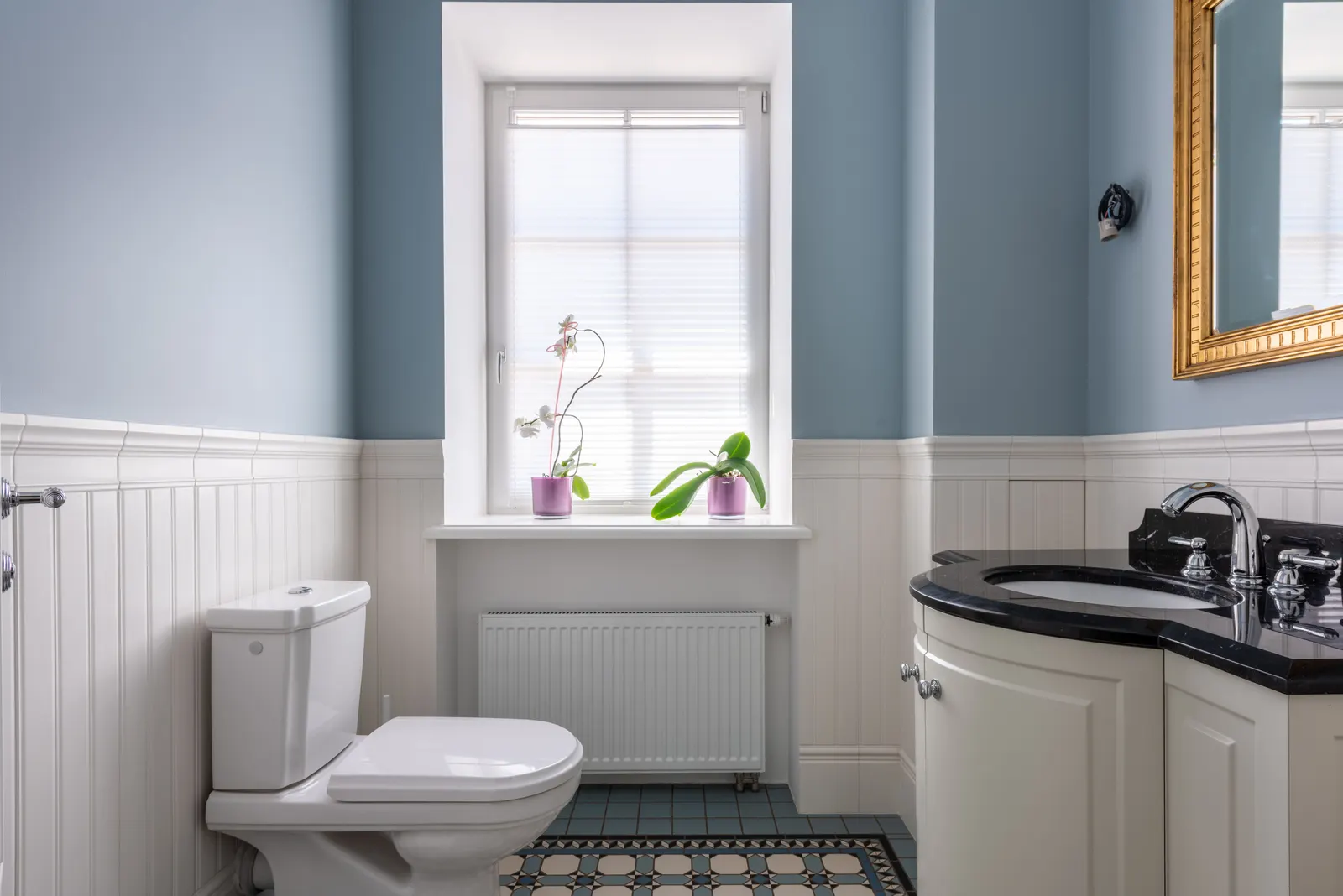
A toilet leaking at a seal is almost always one of three: the doughnut washer between cistern and pan, the rubber washers on the cistern bolts, or the pan connector joining the toilet to the soil pipe. Leaks only when flushing point to the doughnut or connector. A constant drip points to the bolts or the water supply.
Which toilet seal is actually leaking?
Searching for a leaking toilet seal usually means water is appearing around the base of the toilet and you cannot see where it starts. Unlike toilets in the United States, a UK toilet does not sit on a wax ring. The pan outlet pushes into a rubber pan connector, and the cistern on a close-coupled toilet sits on a large rubber washer. Each seal gives itself away by when it leaks, the same timing test used to find which part of a leaking toilet has failed.
Leaking only when you flush, and clean water: the doughnut seal between the cistern and the pan. On a close-coupled toilet, where the cistern sits directly on the back of the pan, this is a very common seal failure.
Leaking all the time, even when nobody has used the toilet: the washers on the cistern bolts, or the water supply connection to the fill valve. The cistern is full of water around the clock, so any seal below the water line weeps constantly.
Leaking only when the toilet is used, possibly with a smell: the pan connector at the back, where the pan outlet meets the soil pipe. This is dirty water and needs treating differently, as below.
Find the leak with tissue and food colouring
Guessing wastes parts. Ten minutes with a torch finds the leak properly.
- Dry everything: the floor, the back of the pan, the underside of the cistern and the pipes. Water tracks along ceramic, so a drip at the front can start at the back.
- Put a few drops of food colouring in the cistern and leave it without flushing for twenty minutes. Coloured water on the floor now means a bolt washer or a cracked cistern. Plain water at a joint means the supply connection.
- Hold dry toilet tissue against each point in turn: the cistern bolt nuts under the back of the pan, the join between cistern and pan, the supply connection and the pan outlet at the back.
- Flush and watch. Coloured water appearing at the cistern and pan joint during the flush is the doughnut. Coloured water at the back of the pan outlet just after the flush is the pan connector.
Water on the floor that has no colour, appears even with the toilet unused and is cold to the touch may be condensation running off the cistern, especially in winter. Tissue that stays dry on every joint but damp on the outside of the ceramic is the giveaway.
Leaking between the cistern and the pan: the doughnut seal
The doughnut is a thick, soft rubber ring that squashes between the flush valve outlet under the cistern and the inlet on the back of the pan. Over years it hardens, flattens and stops sealing, and it tends to fail when the cistern shifts slightly as someone leans back against it.
Replacing it is a job many people do themselves, but it involves lifting the cistern. Turn off the isolation valve, flush and sponge out what remains, disconnect the supply, then undo the two wing nuts under the back of the pan. Lift the cistern straight up, replace the doughnut and fit new bolt washers at the same time, since they come in the same kit. A combined doughnut and bolt kit from a plumbers' merchant is typically well under £15, but check that the doughnut matches the flush valve, because doughnuts come in different sizes and profiles.
The part that catches people out is tightening the bolts. Tighten alternately, a little at a time, until the cistern sits level and firm. Overtightening cracks the cistern ledge or the pan, and a cracked pan turns a small repair into a new toilet. Our guide to repairing a leaking toilet cistern covers the cistern-side seals step by step.
Leaking behind the toilet after use: the pan connector
If water appears behind the pan after the toilet has been used, the seal between the pan outlet and the soil pipe is leaking. This is waste water. Stop using that toilet if you can, keep children and pets away from the area and wash your hands after touching anything wet.
Pan connectors are rubber-finned collars, straight, offset or angled, that push over the pan outlet and into the soil pipe. They fail for three reasons: the pan has moved because its floor or wall fixings have loosened, a new pan was fitted with the wrong length or angle of connector, or the rubber has perished. Old cement or putty joints on older toilets crack for the same reason.
A bead of silicone around the joint is not a repair. It hides the leak while waste water keeps soaking into the floor. The fix is to lift or pull the pan forward, fit a correct connector and re-fix the pan firmly so it cannot rock. That is covered in more detail in toilet pan connector leaking.
Water around the base: why it cannot wait long
The silicone bead where the toilet meets the floor is cosmetic. It is not a seal and it often traps a leak underneath, so the first sign is a soft floor, a loose pan or a stain on the ceiling of the room below. Chipboard bathroom floors swell and lose strength when they stay wet, and joists can rot.
A toilet seal leak becomes urgent when there is a mark spreading on the ceiling below, when the floor gives underfoot, or when the pan rocks. If you are in a flat, the neighbour below will often see the leak before you do; our guide to a ceiling leak below a bathroom explains how to limit the damage. If the leak is from the pan itself rather than a seal, look at toilet bowl leaking for cracks.
What a plumber does, and typical costs
A plumber repeats the dye and tissue test to confirm which seal has failed, because the wrong repair is common. For a doughnut they lift the cistern, replace the doughnut and bolt washers, check the flush valve backnut and reseat the cistern level. For a pan connector they pull the pan, clean the soil pipe socket, fit the right connector and re-fix the pan to the floor or wall so it cannot move again.
Across the London market, a doughnut and bolt washer replacement is commonly quoted at around £80 to £150. A pan connector job that means lifting and refixing the pan tends to cost more, roughly £100 to £200, depending on access and the state of the floor. With us the visit is a £60 call-out at any hour, and the repair price is agreed with you on site before any work starts. Book a toilet repair if the leak is under the floor or the pan is loose.
Questions people ask
Can I use a toilet with a leaking seal?
If the leak is clean water from the doughnut or a bolt, yes, for a day or two with a towel down, and turn the isolation valve off between uses. If it is the pan connector at the back, the water is waste, so use another toilet until it is fixed.
Does a UK toilet have a wax seal?
No. UK toilets connect to the soil pipe with a rubber pan connector, or on older installations a cement or putty joint. Wax rings are used on floor-outlet toilets in North America.
Will more silicone stop a toilet base leak?
No. The silicone at the floor is not part of the watertight seal. Adding more hides the leak and traps water under the pan. Find and replace the failed seal.
Why does my toilet only leak when I flush?
Flushing sends a rush of water through the doughnut seal under the cistern and then through the pan connector. A worn doughnut leaks during the flush itself; a failed pan connector leaks just after, as the water leaves the pan.